The 6 golden rules of a renovation
The 6 golden rules of a renovation
Experts reveal the key things you need to know
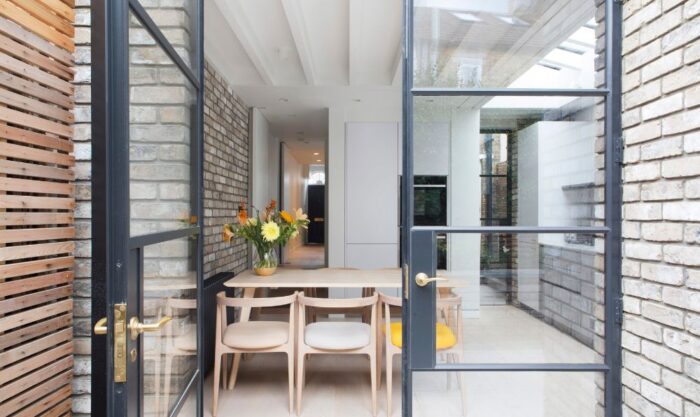
Pictured top: Thames Design & Build
Establish your vision
The first step is to look at why you want to renovate: is it to create a better space to socialise, more family rooms, privacy for homeworking, increased light, modernisation? You’re unlikely to be embarking on a renovation for the sake of it but it helps to clearly define the why at the outset.
“A clear vision will guide every decision and ensure the result meets your needs,” says Pablo Lambrechts of L+ Architects. “Think long-term. Consider how your needs might evolve, such as growing families or aging, and design accordingly to futureproof your home.”
Analyse the practical problems your home has that you need to solve. What will help you use your house as you wish? Consider how to make the most of the light and how the house changes with the seasons. Does the feel of the house need to change?
Get some inspiration. “Make a board of precedent images of projects you like. Consider what would work with your own property – for example, do you want to contrast a very modern extension on a Victorian house or build something in keeping? Look at examples and think about why you like them and what it is you think works about the design,” says Simon Graham from YARD Architects.
Your vision will form the basis of the brief between you and your contractors. Make the brief as detailed as possible. Make as many decisions as you can before you even start: it can be expensive to make changes further down the line.
Know your budget
Be honest and realistic about how much you have to spend, build in a contingency of between 10 to 20%, and keep a tight rein on budget all the way through.
“Every time you make a decision, consider how this will impact cost. It is easy to add in lots of ‘nice-to-haves’ as you build, but small extras and additional costs can quickly add up to become a large overspend,” says Simon.
Consider how you will pay for unforeseen issues, notes Thames Design & Build. You don’t know what you might discover once you start looking underneath floors and behind walls.
Learn to Understand Quotes
“One of the biggest areas of disputes over building work is money – and the difference between a quote and an estimate and perceptions of what was or wasn’t included,” notes Michael Holmes, property expert for the Homebuilding & Renovating Show.
Estimates will give you a broad idea of the cost, a quote is a formal tender for the work. Michael adds that this should detail exactly what has been allowed for, based on plans, specification requirements, contract terms and the proposed build schedule, known collectively as ‘the tender documents’. The quote should also make it clear what has been excluded. Even a fixed quote will usually include some ‘provisional sums’ for items that a builder cannot accurately predict such as foundations.
The more information you provide in the tender documents, the more accurate the quote will be. Always agree changes in writing.
L+ Architects
Be aware of hidden costs
This can trip up those new to renovations, and includes anything from legal costs to practical on-site extras such as how many skips will be required or how many sockets and switches are needed.
Says Michael: “People often forget to allow for fees for professional services. A structural engineer will usually be required to calculate loads for foundations, openings and the roof for extensions and any structural alterations.
A planning application can also involve significant additional fees depending on location for reports required by the local authority on ecology, trees, traffic, flood risk, heritage impact and archaeology.”
You may also need a Party Wall Agreement with a neighbouring property. If your neighbour wants to use their own independent surveyor, rather than yours, this can double the fee.
And in terms of ordering materials, Michael says: “Measuring quantities accurately is very difficult and whilst nobody wants to waste money, ordering slightly too much is usually far less expensive than having to re-order a small quantity – something that can also cause expensive delays to the build programme.”
Be prepared
Before you start your project, declutter, says Ellie. “Not only does this provide a blank canvas to build on, it also embraces a dose of calm at the beginning of your renovation journey.”
Communication will be everything during a project so make sure you shop around for a contractor you have a rapport with. Also, check references – ask to see your contractor’s previous work and speak to former clients, notes Thames Design & Build.
Adds Pablo: “Communication and planning are key to keeping the process smooth and stress-free. Be realistic about timelines and work closely with your architect to minimise delays.”
Know what is expected of you
“Don’t underestimate the time it takes to be a good client,” says Michael. “Timely decisions on design, fixtures, fittings and finishes are vital to the building schedule, including the ability to problem solve unexpected issues along the way.”
Do all you can to ensure you’re not the cause of a delay. “Think about lead times,” says Thames Design & Build. “For example, bifolds and sliding doors take time to fabricate, most are on a 4/5 week lead time.”
If you are the one sourcing materials, check items on delivery and act promptly when dealing with any issues. It is amazing how many purchase arrive damaged, wrong products or incomplete – a broken bathroom unit or missing tiles can cause frustrating delays for all.