Opera in the Park
Opera in the Park
David Stout and Rachel Nicholls on coming to the magical setting of Grange Park Opera for its summer season
Grange Park Opera‘s Summer Season brings many distinguished voices from the opera world to grace its stage. This year, this includes David Stout and Rachel Nicholls who will perform in Tchaikovsky’s Mazeppa, with David singing the title role and Rachel as his god-daughter Mariya. They are no strangers to GPO, having performed in numerous productions there, including 2023’s Tristan & Isolde. They will also take part in Wagner’s epic Ring Cycle at GPO, which takes place from 2026 to 2030.
Ahead of rehearsals, we had the chance to catch up with David and Rachel via Zoom, where they shared their thoughts on preparing for this complex production, their experiences with the Russian language, and their hopes for audiences to take away something deeply meaningful from the performance.
Mazeppa is a demanding opera, not only musically but also linguistically. For both singers, learning Russian has been an essential part of the preparation. Rachel has performed the role of Mariya before but in English. She says: “This did give me a head start in terms of what’s going on in the opera. But it was 25 years ago, so I’m now learning to do it with my voice as it is now, which is very different!”
David is also immersing himself in the Russian language. “I know the Cyrillic script quite well now. I have a good grasp of the general pronunciation, but it’s a slow process,” he says. “What you don’t realise, until you actually really listen to people like Sergei Leiferkus singing in this role, is the subtlety and the nuance involved.”
There are also the darker themes of the opera, with the character of Mazeppa caught in a morally questionable relationship with a much younger woman, who is also his god-daughter. Mazeppa’s cultural significance in Ukraine is also important. “There’s a lot going on in the background, which I’m trying to absorb as well,” says David.
Rachel and David are looking at how to really integrate the music into their bodies, as well as their voices. Rachel says it is key to performing the role authentically, understanding how the voice changes, depending on how you feel. Says Rachel: “I have to bear in mind the emotion that my character is supposed to be feeling when she’s singing a particular phrase. And I have to get that into the sound. Otherwise it just becomes about making pretty noises and that’s not interesting for the audience.” David adds: “I didn’t really know what ‘getting it into the body’ meant until recently, it’s the sensation of the words and the text and the meaning that is conveyed through the physical body. The voice that comes out is just a reflection of that.”
(Scroll to keep reading)
David Stout (c) Benjamin Ealovega / Rachel Nicholls (c) David Shoukry / Tristan & Isolde Grange Park Opera
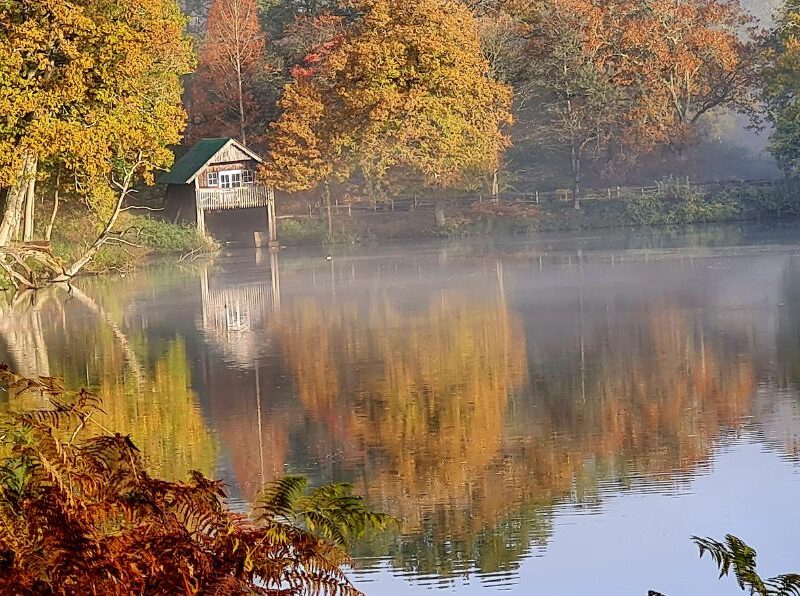
For both David and Rachel, Grange Park Opera holds a special place in their hearts. “It is an incredible experience for operagoers,” Rachel says. “It’s got the beautiful surroundings, the idyllic picnicking in between the acts, and it is just a magical place to go. It’s also opera at its very best.”
They are also impressed by GPO’s outreach programme, which includes a project called Primary Robins that gives 6,500 primary school children nationwide a free 30-minute singing lesson every week of the school year, and initiatives such as cheaper tickets for those under 36. David and Rachel are passionate about encouraging young people to engage with opera and classical music. Rachel, who works with Bedfordshire Youth Opera, stresses the importance of introducing children to music from a young age. “I think that to get more people interested in classical music and to blast away the myth that it is an elitist thing, we need to be investing in education, we need to be doing classical music in schools, and getting people used to the sounds when they are young.”
David, whose three children are at state schools in Scotland, has seen the impact of cutting music funding in schools. While the funding may not be there the interest is – when musician parents set up their own concert to promote singing, it was wholeheartedly embraced. “Music is no longer deemed necessary in some schools, and that’s a real shame, but we’re seeing a bit of a backlash with parents now saying it is essential.”
David and Rachel both got into music at a young age, although for David it was a more circuitous route. As a teen, David had a place at Westminster Abbey Choir School. But he decided to pursue his passion for natural history, getting a degree in zoology, and later becoming a teacher at Epsom College. “A couple of very smart people heard me singing in the school choir and said, I think you should take this a bit more seriously. I got an opportunity to go to the Guildhall School of Music & Drama and I ended up doing three years there.”
Rachel’s talent was discovered as a toddler when her grandfather heard her sing. “My grandfather had painted watercolours but when he lost his sight, he turned to music as a way of having an emotional outlet. I would sing back the music we’d been listening to together in the key that it was in – to have a developed ear aged two is unusual. My grandfather said to my parents that they should encourage me to learn a musical instrument…”
By 15, she was in fully staged operas. “I was very lucky growing up in Bedfordshire. I went to a normal state school, but we had four county youth orchestras, a county youth choir and the Bedfordshire Youth Opera.”
Having performed in some of operas most iconic roles in productions around the world, I wonder if there are any roles they would still really love to do. Says Rachel: “I have been ticking off my bucket list of roles for a long time. I’m interested in exploring new work and would like to do more with living composers.”
David has recently performed as Alberich in Das Rheingold in Germany, a part he will be reprising in GPO’s Ring Cycle. He says: “My first ever proper big grown-up role was Sir John Falstaff as a student at the Guildhall. So to continue in that vein was impossible. I think the Wagner repertoire will open doors for me in the next few years. There are roles within the Verdi repertoire that I would like to do, like Rigoletto.”
In the meantime, they are excited for the summer season. Says David: “It’s quite cliché, but people talk about being transported. When I’ve been to Grange, I’ve been transported, not just as a performer, but also as a witness. It’s something very special.”