Review: Death on the Nile, Richmond Theatre
Review: Death on the Nile, Richmond Theatre
Four stars
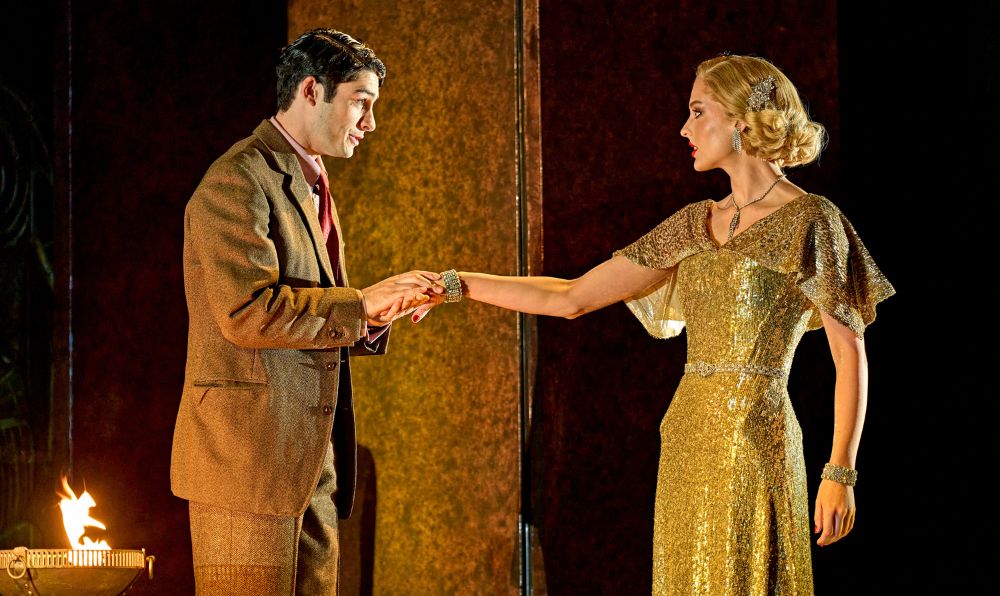
Image (c) Manuel Harlan
Sometimes it’s easy to wonder why people bother going to the theatre, when so many of the productions are reworkings of old television series and films. Why not just stay at home and stream the original? And then a show comes along like Death on the Nile, which is playing at Richmond Theatre this week, and you remember that there really is nothing like live theatre. A thoroughly professionally staged production, with an enjoyable script and some high-quality acting, is a completely different experience from watching through a screen. You jump with the gunshots. You lean in sympathetically to expressions of pain, you tense up when events are running out of control, you relax when things are going well and laugh aloud when it’s funny. And the whole experience is amplified because you are sharing it with a few hundred other souls who are feeling the same as you. Some people go to live sport for a workout for the emotions, but there is nothing like a play.
So congratulations are due to the director, Lucy Bailey, for her vision for this piece. It’s not an easy story to land well, not least as it’s supposed to be a mystery but the cat is comprehensively out of the bag — a repeat of the film version has been running every Christmas and Easter for decades and everyone knows the plot. Bailey’s answer has been, first, to substitute for suspense by immersing us in a stylishly noir atmosphere. The idea works pretty well with the 1920s setting. Designer Mike Britton has produced a pared-back, two-storey set of sliding Venetian screens, through which lighting designer Oliver Fenwick moodily bounces angular shafts of light that glitter off sequine dresses and a golden sarcophagus. With several layers of screen that move independently, the staging can provide rooms beyond rooms, where movement in the background suggests covert activity going on just out of sight. Ken Ludwig’s script departs from Agatha Christie’s novel by starting with a party in the British Museum, where we encounter the participants in the central love triangle. Five minutes after kissing the hand of Linnet Ridgeway (Libby Alexander-Cooper) rather showily as his fiancée introduces them for the first time, we glimpse Simon Doyle (Nye Occomore) dancing with Linnet in a dimly lit back room and we know something is up. The main action is set on a Nile cruiser, and the sophistication of the staging — with its watery reflections of the river fluctuating over the set and sound designer Mic Pool’s expert atmosphere-creation through lapping water and nighttime animal cries — makes up for any shortage of plot suspense.
(Scroll to keep reading)
In fact, Bailey has encouraged the actors to embrace the fact that the audience knows the plot, and at times they take a slightly knowing and humorous tone of voice. “Oh God, I hate this part,” sighs the melodramatic Salome Otterbourne, as they all sit down for the denouement in the saloon. “I love this part,” replies Poirot with satisfaction, raising a laugh. It can be a dangerous game, breaking the fourth wall and acknowledging the audience, but it isn’t overdone, doesn’t give the game away and works here. RSC veteran Mike Hadfield makes a kindlier Poirot than some exponents of the role, but there is still a core of steel in the slightly melancholy, moustachioed, dignified little detective. He often takes on the role of silent, watchful observer, as the other characters go about their furtive (or noisy) business. Esme Hough steals scenes as the jilted fiancée Jacqueline de Bellefort. Glynis (‘Makepeace’) Barber is enjoyable as Salome, a middle-aged lady on the make; Camilla Anvar makes a comically designing ingenue as Salome’s daughter Rosalie and Nicholas Prasad both convinces and entertains as Dr Ramses Praed, the object of Rosalie’s designs. Terence Wilton blusters as the hammy Septimus Troy, Howard Gossington fumes hyperactively as museum director Atticus Praed, and as MI5 agent Colonel Race, Bob Barrett ponderously pursues the evasive fraudster Annabelle Pennington (Helen Katamba).
Not everything works perfectly, of course. I questioned some of the blocking in the second act, where the characters take part in a dimly lit mime as they help change the scenery: this felt just a bit too stagey. But the rest of the production struck an equitable balance. A pacy, professional show that makes excellent viewing.