


5 ways to help teens build resilience
5 ways to help teens build resilience
By Jake Humphrey, Founder of High Performance Podcast and co-author of Game Plan: Level up Your Mindset. Own Your Future
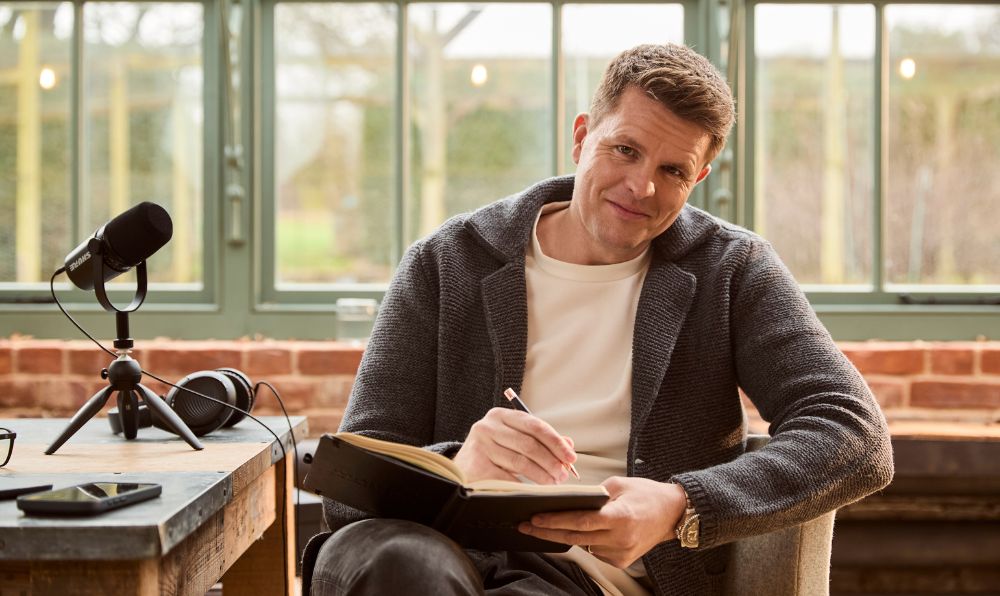
Pictured top: Jake Humphrey (c) David Cummings
When we started the High Performance Podcast six years ago, speaking to high achievers about their journeys, we immediately received responses from parents and teachers saying that young people needed to hear the messages we were being given. Common themes emerged: young people today are under pressure, they lack the mental strength needed to handle setbacks, uncertainty and challenge and they resist failure.
That’s not because they lack ability. It’s because they haven’t yet been given the tools. The good news is that mental strength can be developed and below are five ways I think we can help teenagers build it.
1
Realise failure is learning
One of the most important shifts we can make is helping teenagers understand that setbacks are not unusual. Instead, they are inevitable and a helpful part of the learning process. Rather than them interpreting failure as a sign that something is wrong with them, we need to reframe it as sign that they most likely stepping out of their comfort zone and learning. Most important, is how they react to it.
In our new book, Game Plan, we share a simple but powerful idea:
Life + Response = Outcome.
We can’t always control what happens, but we can learn to take responsibility for our response. That shift, from “why is this happening to me?” to “what can I do next?”, is where mental strength begins.
2
Build self-belief through small wins
Mental strength isn’t about bravado or arrogance, it’s about self-awareness, self-belief and the understanding that you have the capacity to learn, adapt and improve.
That self-belief is often built through evidence, which for teenagers means helping them experience progress in small, achievable ways. That could involve completing something they found difficult (maybe homework) or sticking with something uncomfortable (like a new situation) and seeing that effort leads to improvement.
A simple shift from “I can’t do this” to “I can’t do this yet” can completely change how a young person, or indeed any of us, approaches a challenge. It reinforces the idea that ability isn’t fixed but something that can develop and grow.
3
Never Sit in the Comfy Chair
One thing I wish I had known sooner is that comfort doesn’t enable growth. If you are feeling a bit nervous about doing something, that’s good as it probably means you are stretching yourself.
For teenagers, that doesn’t need to mean anything extreme. It might be something as simple as speaking up in class when they are naturally quiet, trying a new sport, or putting themselves forward for something where there’s a risk of failure. These moments matter because every time they step into discomfort and come through it; they build evidence that they can handle challenge. Eventually over time that evidence becomes mental strength.
Progress happens at the edge of your comfort zone and learning to operate there is a skill that will serve them for life.
4
Manage Your Inner Voice
Young people can be incredibly hard on themselves, and that internal voice can either build them up or hold them back. Having experienced bullying at school, I struggled with negative self-talk as a teenager and through my twenties, which significantly impacted my confidence and behaviour.
Mental strength isn’t about eliminating negative thoughts. It’s about recognising them and having a strategy to respond to them. If you can notice when self-talk becomes overly critical and understand that a thought is a story made up in your head, then you can reframe your thinking in a more positive way.
Helping teenagers develop this awareness gives them a level of control that many adults never learn.
5
Understand Who You Are
When a young person ties their identity entirely to one thing i.e. their grades, or their social status, any setback in that area can feel overwhelming and cause problems. Part of building mental strength is helping them understand that who they are is bigger than what they do. There have been so many guests on the podcast have been at the top of their game but have lacked an identity outside of what they do.
They need to understand that their values, their effort, their behaviour and how they treat others matter just as much, if not more, than any single outcome. When their self-identity is separate and secure, setbacks lose their power and become events rather than definitions.
The reality is that we can’t remove challenge from young people’s lives and nor should we try to. What we can do is equip them with tools and strategies to have the confidence, awareness and resilience to face challenge and keep moving forward. I believe, if we can help young people build that, we’re giving them something far more valuable than short-term success. We’re giving them the foundations to thrive.