


Invisalign at 30, 40 or 50: an honest guide for London adults
Invisalign at 30, 40 or 50: an honest guide for London adults
Adult orthodontics is no longer the quiet exception it was a decade ago. London clinics now see steady numbers of patients in their thirties, forties and fifties straightening teeth they have lived with for most of their lives. The reasons given at consultation have shifted alongside the numbers: appearance remains part of it, but comfort, bite function, hygiene access and the long-term health of the teeth are now mentioned at least as often.
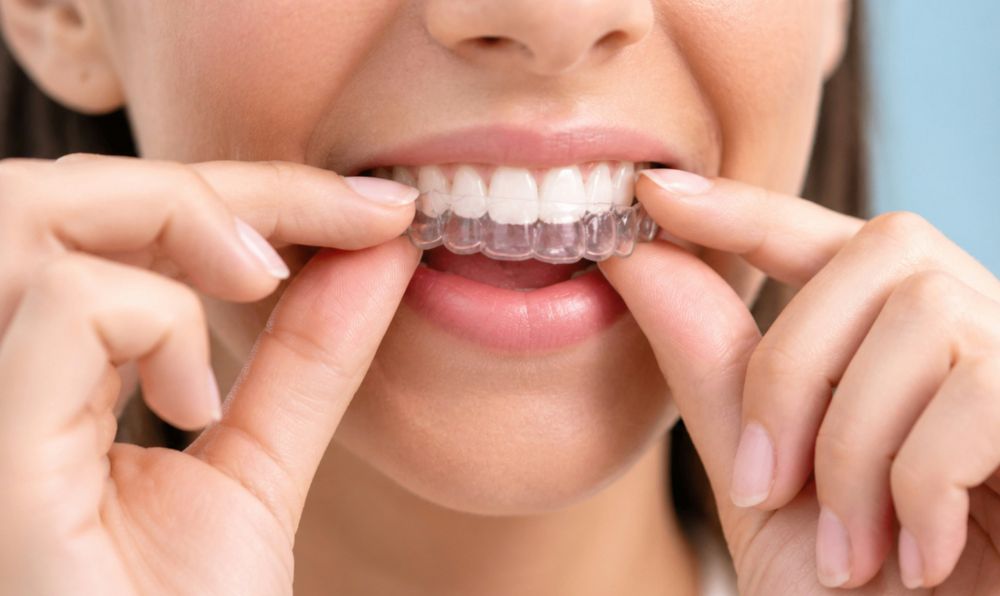
Clear aligners — the category led by Invisalign — have made this shift practical for adults who would never have considered fixed metal braces. The treatment is removable, usually invisible at conversational distance, and compatible with professional life in a way the earlier technology was not.
Alongside the clinical option, however, a parallel market has emerged. Direct-to-consumer aligner kits are advertised widely, often at lower prices, and rely on home impressions and remote supervision rather than in-person clinical oversight. For a London adult comparing the two, understanding what each category actually involves matters more than the headline price.
What aligners can treat — and when they’re not the right answer
Clear aligners work for a wide range of mild-to-moderate adult cases: spacing, crowding, mild rotations, and minor bite corrections. For many adult patients, aligners are now the default treatment and the result compares well with the older fixed-brace alternative.
Aligners are less well-suited to certain cases: severe crowding, significant bite discrepancies, impacted teeth, or cases where tooth movement needs to happen in combination with other dental work. In those cases, fixed braces, surgical options, or a staged treatment plan may be more appropriate.
An honest assessment is the test. A clinic that recommends aligners for every presenting case regardless of severity is one worth questioning. A clinic that says “aligners are a reasonable option for your case, and here are the alternatives” is one worth continuing with.
Clinic-led versus mail-order aligners
The structural difference between in-person clinical aligner treatment and direct-to-consumer kits is the clinical oversight around the aligners themselves. The aligners used in both categories are often broadly similar; what varies is the clinical process they sit inside.
Examination and imaging. In-clinic treatment includes an in-person dental examination, X-rays, and a digital 3D scan. Several issues that affect aligner suitability — gum disease, hidden decay, loose fillings, root problems — are only visible with imaging and a clinical examination. A home impression cannot replace this.
Monitoring. In-clinic treatment includes review appointments where the dentist checks that teeth are moving as planned, that gum tissue remains healthy, and that any issues are caught early. Direct-to-consumer treatment typically relies on patient self-reporting or app-based monitoring.
What happens if teeth don’t move as planned. Mid-treatment refinements are common even in well-planned cases. In-clinic treatment handles this through additional scans and refinement aligners; ask at consultation which refinements your plan includes. Direct-to-consumer refinements are a different conversation.
Underlying dental health. Several patient presentations are not safe candidates for aligners without preliminary dental work. Hidden decay, periodontal disease and untreated bite issues all need addressing before orthodontic forces are applied. This is the kind of thing an in-person examination catches and a mail-order process does not.
The direct-to-consumer model is cheaper for a reason: it strips out the clinical oversight. For some patients with simple cases and healthy mouths, the result is acceptable. For patients with any complication, the result can be more involved than the saving suggested.
What a good consultation includes
A consultation that is worth your time, at any London clinic, should include four specific elements.
A digital scan. Modern practices use an intraoral scanner (iTero or equivalent) rather than physical impressions. The scan produces a 3D model of your current teeth that the clinician can show you, measure, and use to plan treatment.
A check of gum health. Active gum disease must be addressed before orthodontic treatment begins. The consultation should include a periodontal assessment, not just an aesthetic one.
A treatment simulation. Software can show you a simulated end-point for your treatment before you commit. This is useful because it gives you a concrete sense of what the plan is working toward.
Clear pricing. The total cost of treatment should be set out in writing before you commit. Where finance is available, the terms should be clear.
At Dental & Wellness London in Islington, Invisalign consultations are free and include an iTero 3D scan. The clinic is at 222 Essex Road, Islington N1, two minutes’ walk from Essex Road station. Treatment is planned and delivered by Dr Vishal Patel, BDS, MSc Aesthetic & Restorative Dentistry (GDC 103127), an Invisalign provider experienced in long-term treatment planning. Over 20 years and more than 50,000 appointments, he has completed a wide range of treatment at the clinic, planning smile design and oral health together over the long term. The clinic was founded in 2009.
Cost
At Dental & Wellness London, Invisalign treatment pricing is set out in writing before you commit:
- Express (7 aligners): £2,200
- Moderate (14 aligners): £3,400
- Unlimited: £4,500–£4,900
0% APR finance over 12 months via Tabeo is available, subject to status. The right tier depends on your case, which is confirmed at consultation after the scan and assessment.
Across London clinics, Invisalign pricing varies with case complexity, clinician experience and what is included. The useful comparison is not headline price alone but total cost over the full treatment, including scans, refinements and retainers.
Life with aligners
A few practical realities for anyone considering clear aligner treatment:
Wear time. Aligners need to be worn 20–22 hours per day to work. They come out for eating, for drinking anything other than water, and for brushing. Consistent wear is non-negotiable; patients who wear aligners for less time see slower, less predictable results, and sometimes compromised outcomes.
Eating and drinking. You remove aligners for every meal and every drink that isn’t water. This changes the rhythm of a working day initially. Most patients adjust within two to three weeks.
Attachments and refinements. Many cases need tooth-coloured attachments bonded to specific teeth to help the aligners grip and apply the planned force. These are temporary and are removed at the end of treatment. Some cases need mid-treatment refinements — a new scan and a new set of aligners to finish the plan.
Retainers afterwards, for life. The single most under-discussed aspect of adult orthodontics. Teeth move throughout life. Retainers worn as directed — typically nightly, long-term — keep the result stable. Without them, teeth drift back toward their original position within a few years.
Treatment-time estimates vary by case and should not be promised in advance. Results vary between individuals.
The practical question for London adults
For a London adult considering clear aligners, the practical question is less “which brand” and more “which clinical process”. The brand of aligner you end up wearing matters less than the clinic planning the treatment, the quality of the diagnostic work before treatment starts, and the clinical support available if something needs adjusting midway through.
A good consultation answers that in an afternoon. A good practitioner says no when the case isn’t right for aligners, and yes clearly when it is.