


Why Small Gardens Produce Big Waste – A Skip Hire Expert’s Guide to the Suburban Clear-Out
Why Small Gardens Produce Big Waste – A Skip Hire Expert’s Guide to the Suburban Clear-Out
After fifteen years of dropping skips onto driveways across the UK, I can tell you the single most surprising lesson this industry has taught me: the smaller the garden, the faster the skip fills. It sounds backwards. Surely a sprawling country plot generates more waste than a neat suburban garden behind a terraced house? In practice, the opposite is usually true, and understanding why will save you money, time and at least one bad weekend.
Compact gardens are dense. Every square metre works hard. There is the shed that has stood since the previous owner, the rockery nobody has touched since 2009, the collapsing fence panels leaning behind it, and borders packed with mature shrubs whose root balls come out the size of medicine balls. Add the paving slabs from a patio refresh and the bags of soil that always weigh three times what you expect, and a garden of thirty square metres can produce more tonnage per metre than a plot ten times its size. Soil and rubble are the culprits: they are brutally heavy, and small gardens are full of both.
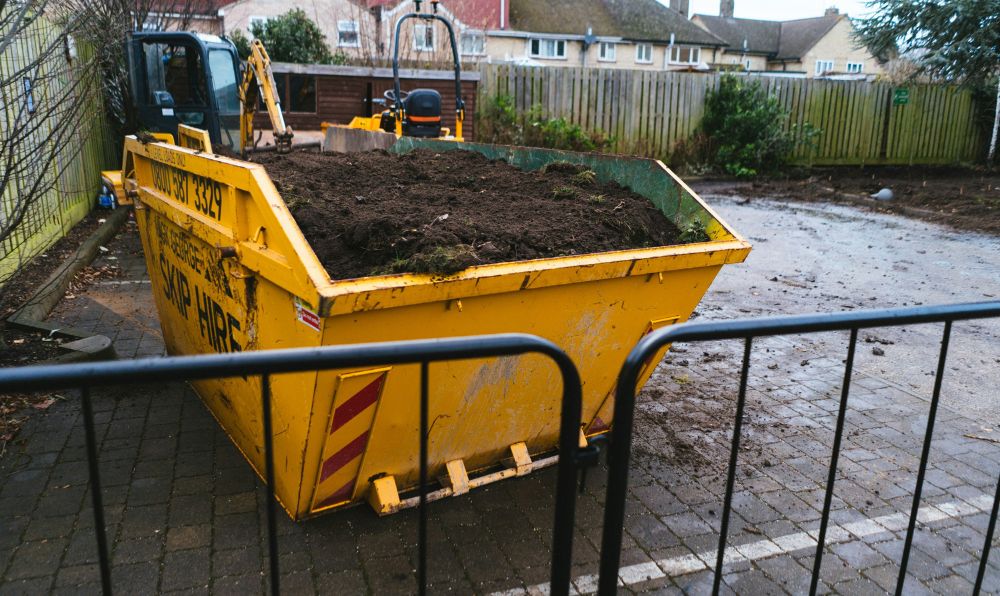
This is where sizing goes wrong. Homeowners planning a clear-out tend to think in volume, glance at the mess, and order a skip far bigger than the job needs, or worse, one too big to hold heavy inert waste anyway legally. Most suburban garden projects sit comfortably within a compact container, which is exactly why it pays to search for easySkip for small 4 yard skips near you before committing to anything larger, because matching the skip to the job protects both your budget and your driveway. A 4-yard skip holds roughly 30 to 40 bin bags of waste, takes soil and rubble without breaching weight limits, and fits on a standard drive without a permit.
The Small Garden Paradox: Dense Plots, Heavy Loads
The paradox has a simple explanation: garden waste in compact suburban plots is disproportionately inert. Grass clippings and hedge trimmings compost down or go in the green bin. What ends up in a skip is the heavy legacy material that accumulates in small spaces precisely because there is nowhere else to put it. Over the years I have watched the same items come out of thousands of gardens, and the pattern barely changes:
- Broken concrete, old paving and hardcore from patios and paths laid decades ago.
- Turf and topsoil from lawn replacements, which weigh around a tonne per cubic metre when damp
- Timber from dismantled sheds, decking, pergolas and fencing
- Ceramic pots, bricks, edging stones and the remains of abandoned water features
- General mixed waste: rusted furniture, tired parasols, perished hosepipes and compost bags
None of this fits a wheelie bin, and repeated tip runs in the family car are slow, messy and often restricted by local recycling centre rules on soil and rubble. A skip solves the problem in one hit.
Why the 4 Yard Skip Is the Suburban Workhorse
For garden clear-outs, 4-yard skip hire occupies a sweet spot that the industry quietly relies on. It is small enough to sit on a driveway, avoiding council permit fees for on-road placement, yet large enough to handle a full border renovation or shed demolition. Crucially, it is one of the few sizes most operators will fill with soil and rubble. Larger skips have weight restrictions that catch people out: an 8-yard skip filled with soil is often too heavy to lift safely, so drivers refuse it or charge for offloading. Booking 4-yard skip hire near you sidesteps the issue entirely. The practical advantages stack up quickly:
- No road permit needed when placed on private property
- Legal to fill with 100 per cent inert waste (soil, rubble, hardcore) with most providers
- Cheaper than mid-size skips, typically by a meaningful margin
- Small footprint leaves driveway access for the family car
- Faster to fill, so shorter hire periods and tighter project timelines
Planning Your Clear-Out Like a Professional
The difference between a smooth weekend and a stalled one is almost always preparation, not effort. Professional landscapers order their skip before lifting a single slab, and homeowners should follow suit. When comparing skips for hire near you, sort the practical questions first, then the price. A cheap skip that arrives late, or from a carrier who cannot show a waste licence, is no bargain at all. Before booking, work through this checklist:
- Measure your driveway and check access width for the delivery lorry
- Estimate waste honestly: pace out the pile and remember soil compresses far less than greenery
- Confirm what the provider accepts; plasterboard, tyres and paint usually cannot go in
- Check the hire period covers your realistic timeline, including a rain delay
- Ask whether the operator holds a valid waste carrier licence
Load strategically too. Heavy inert material goes in first and flat, timber and bulky items on top, and everything level with the rim. An overloaded skip may be refused at collection, and that is an argument nobody wins.
What Goes In, What Stays Out
Garden waste seems harmless, but the rules matter. Soil, turf, rubble, timber, metal and general garden debris are all fine. Asbestos cement (common in old shed roofs), gas bottles, chemicals, liquids and invasive plants such as Japanese knotweed are not, and require specialist disposal. When in doubt, ask before you load. Reputable local skip hire firms would far rather answer a question than send a contaminated load back.
A Note on Rogue Collectors
One final warning from the trenches: if your waste ends up fly-tipped, you are legally liable, even if you paid someone to take it away. The man with a van quoting suspiciously little on social media is a genuine risk to your wallet and your record. Searching mini skip hire near me and choosing a licensed operator costs a little more and removes the risk entirely, because licensed carriers must document where every load goes.
A small garden holds more history, and more weight, than it ever lets on. Clear it properly, size the skip to the job rather than the anxiety, and the transformation you have been putting off becomes a single, satisfying weekend. The garden you want is under there. It is just buried under the one you have.