Jonny Wilkinson: The Power of Presence
Jonny Wilkinson: The Power of Presence
Rugby legend Jonny Wilkinson on mindfulness, mental wellbeing, and tapping into your greatness.
When most people think of Jonny Wilkinson, they remember precision under pressure, tireless discipline, and that drop goal that clinched the 2003 Rugby World Cup for England. But while his rugby career was built on control, rigorous training and high expectations, his life now is defined by a very different ethos. Since retiring from rugby over ten years ago, he has spoken openly about his own mental health challenges, which resulted in seismic changes to how he approached his wellbeing, with mindfulness and openness key.
I was invited along to meet Jonny to find out more about his philosophy, which he was set to demonstrate to a small group of guests at Old Wimbledonians. He wanted to show how a subtle shift in focus can change everything. The session began with an exercise as simple as it was revealing: walking with presence. Jonny asked us to walk slowly around the pitch, letting go of self-consciousness and becoming deeply aware of each step. When we walk mindfully, tuning in to sensation rather than racing through thought, we feel more grounded, more present. And from that grounded place, we perform better.
We then passed a rugby ball between us as we walked. What mattered wasn’t the technique, but the state of mind: open, receptive, and unconcerned with judgment. When we are fully engaged in the moment, free from anxiety about outcome or how we’re perceived, we unlock something deeper. And remarkably, even for those of us with no sporting background, this approach worked. With presence, we could catch and pass with surprising ease.
One insight from Jonny stuck with me: you can’t control how the ball is passed to you but you can choose how you pass it on. In other words, life will always throw unpredictable moments your way. What matters is how you respond. If you’re passed a crappy ball, don’t just “shovel the shit,” he said with a grin. Choose your response. Add your creativity.
Jonny also stresses the importance of calmness, which brings connection. Before the demands of the day arrive, he checks in with himself, honestly and without judgment. Feel what’s happening in your body and breath and your day should flow from there. One small but meaningful ritual is not leaning on anything when you put on your shoes in the morning. You are creating your own balance not relying on external supports.
Jonny, now 46, reflects on how different his mindset is from his rugby days. Back then, mornings meant bracing for what was ahead. He would wake up already inside a story of stress and survival. “You tell yourself, ‘This is going to happen, that’s going to be hard.’ You’re reacting before the day even begins.”
Now, he sees each day as a chance to create, not just survive. “I don’t want an old story living today for me. I want to live it myself.”
(Scroll to keep reading)
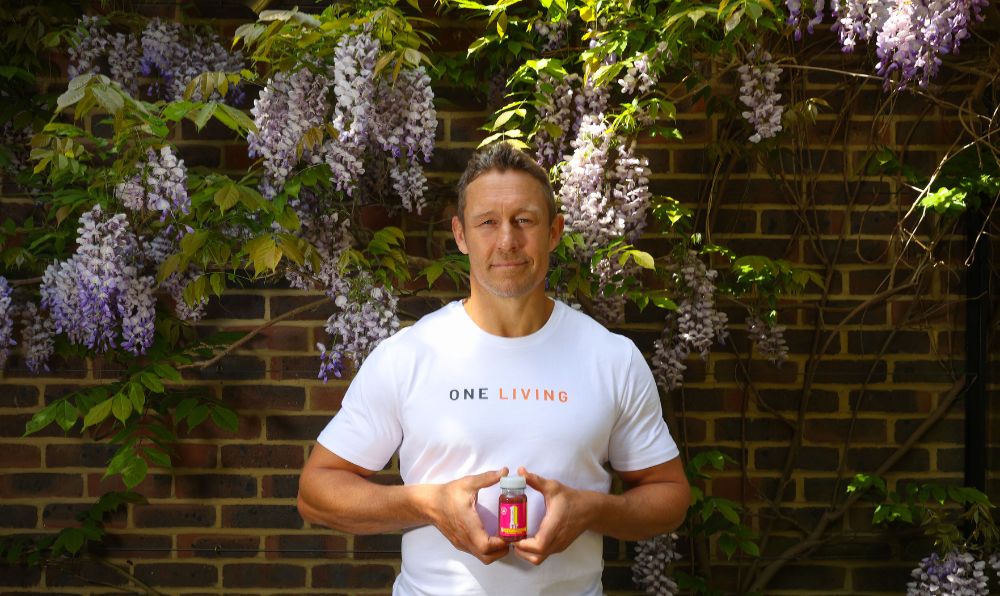
Part of Jonny’s wellness routine also involves what he puts into his body. He discovered the benefits of fermented foods after brewing kombucha at home while his wife was training as a nutritionist. That led to the creation of One Living, his own health brand, offering kombucha and wellness shots. The range stresses the connection of gut health and its role in all aspect of our wellbeing.
This is all part of a bigger message: wellness isn’t something to reach for when you’re broken. It’s a fuel source. “When you’re truly connected, it’s like plugging into a limitless energy source and being able to respond to anything,” he says. “But when you’re not, you’re running on battery.” And too many of us, he adds, only plug in at night, through sleep. The rest of the time, we’re drained.
Just as the day starts with presence, Jonny ends it with reflection. He calls it a “salute to the day”—a way of honouring what’s passed and inviting peace. “It’s like saying goodbye to a life,” he reflects. “Breathing it out. Letting go. And starting again.”
When asked what he’d most like to share about mental health, Jonny wants to eliminate the stigma that a mental health challenge is a weakness, adding that from this place, real change can happen. He’s passionate about reframing mental health, and this is embedded in his NSPIRED charitable foundation, which empowers coaches and teachers to support young people. It’s also woven through his podcast I AM, where he interviews guests about ‘peace, performance and potential’.
Jonny warns against becoming closed off. “At one point, everything in my life was an open door. At some point, the doors closed and I stopped opening them. Maybe I thought I knew enough. Or I got scared. Or I just stopped being curious.”
Now, he reclaims that openness, and encourages others to do the same. “Scepticism’s fine,” he adds, “but be sceptical with a willingness to learn. If all you do is close doors, don’t be surprised if your world starts feeling small.”
While Jonny once calculated his worth by his achievement on the pitch, what has he learned since about what greatness looks like? If we look at top sportsmen, they make it look effortless. “You see them hitting the ball and it flies like it’s crazy. We call it timing, but essentially it’s just absolute presence and engagement.”
This he calls inner genius, which we can all tap into when we’re open, curious and receptive. There are times when we need to push but if you’re just relying on grit to get you through, it will burn you out. It isn’t sustainable.
He adds that presence isn’t a luxury. It’s your power source. And when you show up for your life with awareness and intention, everything changes.