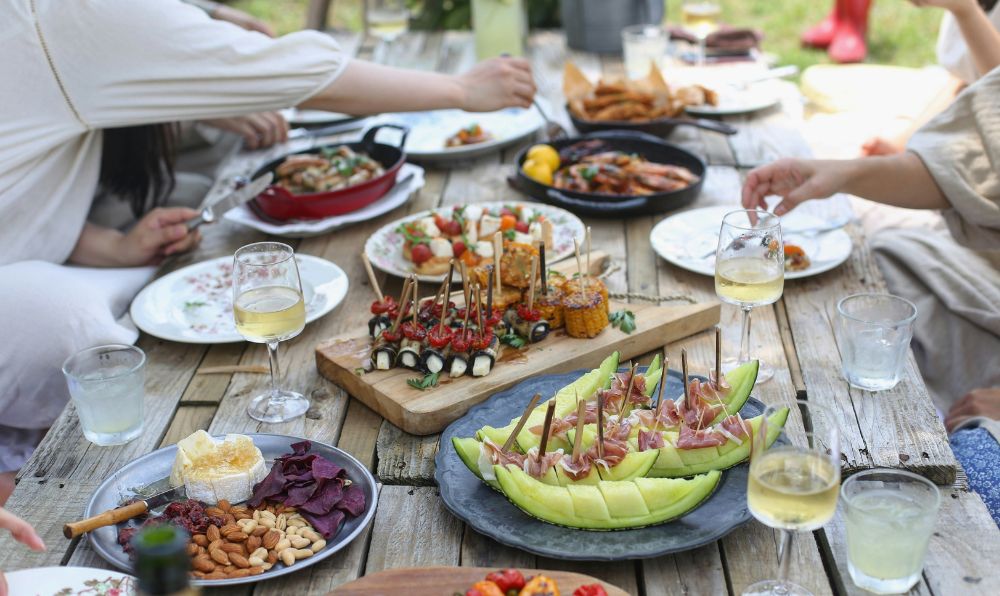
Tips for Creating the Perfect Outdoor Dining Space this Summer
An outdoor dining space is an excellent addition to any home, allowing you to entertain and enjoy meals with friends and family in the great outdoors. There are now so many ways of recreating our internal spaces outside that almost every garden can accommodate an al fresco dining area.
You can have comfortable furniture, ambient lighting, many styles of heating, and even outdoor rugs for that finishing touch.
But first things first – where is your dining area going to be? Putting tables and chairs on grass is not practical, so you’ll need a solid foundation, like a patio or decking area that’s big enough for a table and chairs. When planning the size of the patio or decking, remember to leave enough space for chairs to be moved back comfortably and for people to walk around the table.
There are also many decking materials to choose from, each with its own pros and cons. Timber is good, but it can get very slippery when wet and can develop algae and moss if it’s in a shaded, damp area without good ventilation or direct sunlight. It requires a lot of cleaning and maintenance to keep it in good condition.
As a result, many homeowners prefer composite decking these days. It has the look of wood but needs less maintenance and doesn’t warp. The average composite decking installation cost is typically higher than that of timber, but costs can even out over the long term since composite decking lasts for years and doesn’t require expensive staining and treatment every year.
In terms of location, for the most part, people keep their garden dining space close to the house, as it’s more practical. Unless you have a full summer kitchen, it’s easier to transfer food, drinks, and plates from the kitchen to a patio or deck that’s next to the house. This location also provides shade, privacy, wind protection, and access to extra power points, if needed.
Being close to the rear of the property also lets you extend your internal living space into the garden. Building a deck, adding a pergola, or installing an awning creates additional space for relaxing, entertaining, and dining while keeping a smooth flow from the inside to the outside. An overhead covering also protects you from the unpredictable British weather when dining outside!
Now that you have your base, it’s time to choose the furniture for your outdoor dining area. Plenty of materials can withstand being outdoors, including teak, aluminium, and a rattan/polyethylene weave. Your choice will depend on the look you want, your budget, and whether you’ll store the items under cover or leave them out over winter.
Of course, even though the summer days may be bright and warm, the evenings will be dark and probably chilly. Consider how you will light the dining space and whether you want to provide heating.
As you do inside the home, layering the lighting outside gives you flexibility to alter the mood and provide the right setting for the occasion. Fixed lights on the rear of the house can be augmented with hanging fairy lights overhead, table lanterns, solar-powered lights, or hurricane lamps with real candles around the perimeter of the dining area.
There are lots of heating options for outside dining if you like to linger once the sun has set. Portable patio heaters, electric infrared heaters, or a nearby fire pit will keep guests warm when the temperature drops. Soft fleeces or blankets on the back of dining chairs provide a cosy option and a more personal touch.
For daytime dining, if privacy is an issue, add large potted plants to form a discreet screen or use a purpose-built garden screen to section off the area. Surround the space with lightly scented plants such as jasmine, honeysuckle, roses, or herbs such as rosemary and thyme.