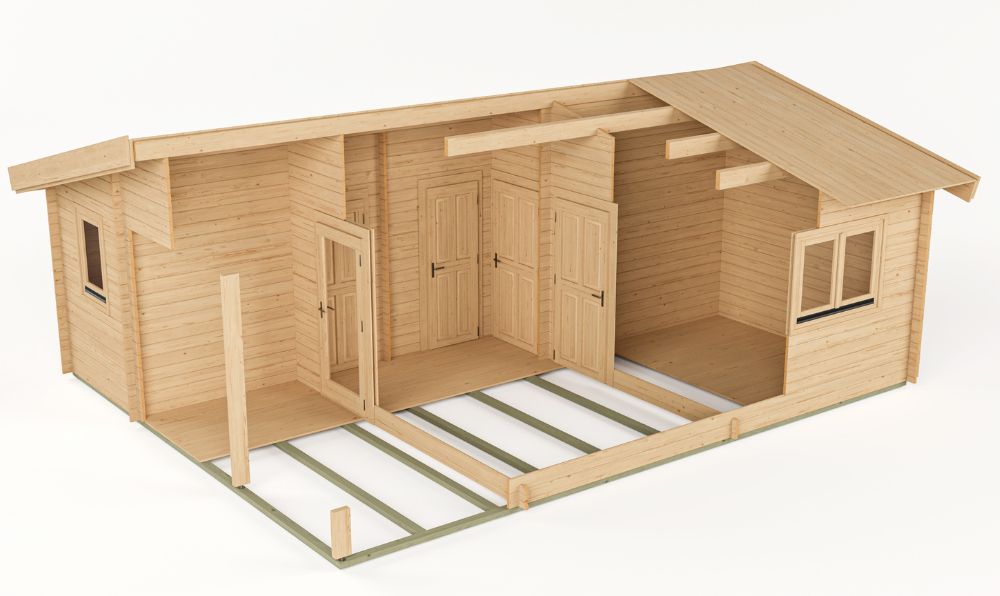
Custom Log Homes: A Bespoke Alternative to Traditional Brick Houses
Custom Log Homes: A Bespoke Alternative to Traditional Brick Houses
Most buyers default to traditional brick properties due to market prevalence when selecting a new full-time residence. Choosing the right construction method successfully means identifying specific family needs and long-term living requirements.
If you require a standard residential property with conventional features, a traditional brick house easily fulfils those requirements. Families seeking a bespoke living space benefit more from the specific design capabilities of custom log homes.
We will explore how these two primary options compare to help you finalise your plans.
Speed of construction and moving in
Everyone wants to transition into their new home as fast as possible with minimal downtime waiting for contractors. Custom log homes are usually manufactured off-site to exact specifications in controlled environments and assembled rapidly on the plot.
The timber assembly process takes a fraction of the time compared to standard masonry:
- Rapid assembly. You gain a weather-tight shell in a matter of days.
- Weather vulnerability. Rain and freezing temperatures severely complicate masonry work, often causing significant schedule delays or requiring expensive equipment to keep the project moving.
- Overall timeline. The time spent waiting for materials to dry ultimately adds up, extending your transition period significantly.
Families experience minimal downtime with a log build and transition into their new primary residence much faster, removing the stress of prolonged construction phases.
Design flexibility and floor plan customisation
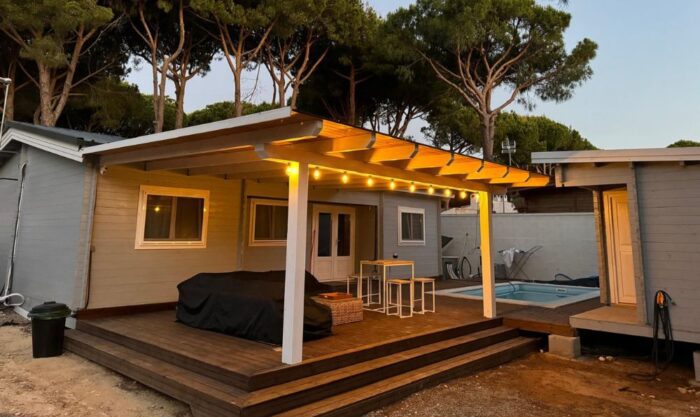
The ability to tailor the layout of your property is a vital step in planning a permanent home. Custom log home builders provide unmatched design flexibility right from the planning stage:
- Open-plan living. Log construction uniquely allows you to turn necessary structural supports into stunning visual features. Instead of hiding steel beams behind plaster as in typical brick builds, you gain spacious ceilings and exposed timber trusses that define the space.
- Standardized constraints. Most brick properties are built to rigid, mass-market developer templates that discourage customization. Conversely, the log home industry is inherently bespoke, inviting you to dictate the exact wall placement and room flow from the very first draft.
- Achieving character. To replicate the dramatic architectural feel of a log home in a standard brick property often requires expensive, purely decorative interior add-ons, whereas the log structure provides natural, breathtaking beauty built right into the base price.
A bespoke log build allows you to tailor the property to your family’s daily routines without these technical hurdles or a heavy financial burden. You design the rooms around your lifestyle, ensuring every square metre serves a practical purpose.
Thermal performance and daily comfort
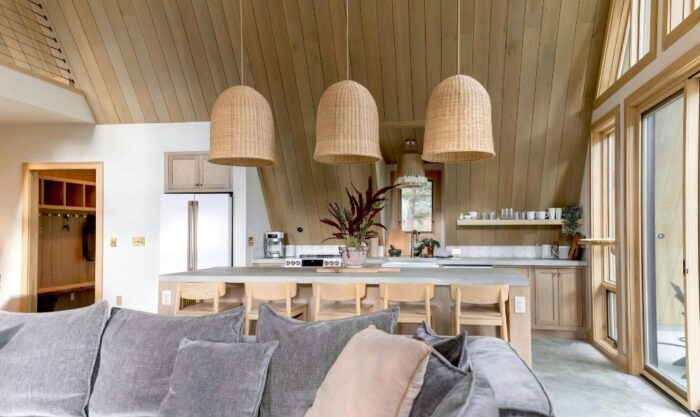
Balancing construction costs with daily comfort is key to keeping your family happy over extended periods. Timber possesses a unique combination of natural thermal resistance and thermal mass, offering distinct advantages for daily living.
The cellular structure of the wood inherently insulates the home, while the sheer density of the logs creates a thermal battery effect, absorbing heat during the day and radiating it at night to keep heating overheads low. You can count on the solid timber structure to continuously maintain a comfortable, breathable climate inside the property across all seasons.
To understand this effect fully, we can look at the expertise of Nida Log Houses, a Lithuanian manufacturer with over 20 years of experience crafting solid log properties. As a company that has completed more than 48,000 projects in 15+ countries, they understand exactly why families choose timber for full-time living.
According to Nida Log Houses approach, they build with nature, not against it. Wood is a living material that naturally regulates indoor humidity, essentially performing the function that modern technology tries to imitate. They also observe that natural materials create a profound sense of calm and breathability, helping you relax and making it easier for people with asthma or allergies.
As the brand notes: “When you step inside a log home, something settles in you. That’s not an accident—it’s the whole point.”
While all modern homes require standard ventilation, solid wood acts as a natural buffer. Its hygroscopic properties absorb and release ambient moisture, working with your systems to contribute to a highly comfortable and breathable indoor climate.
Brick also utilizes high thermal mass to naturally regulate temperature fluctuations, but standard masonry usually requires supplementary cavity wall insulation to meet modern energy efficiency standards, which is a benchmark that thick log walls can sometimes achieve naturally.
If you want a highly energy-efficient building envelope with a brick build, you have to purchase and install thick layers of artificial insulation, adding further labour to the project.
Long-term maintenance expectations
Knowing you can manage the long-term upkeep of your home is an important reassurance factor for any family. Log homes require routine exterior treatments every few years to protect the timber from moisture and UV degradation.
In addition to scheduling these protective surface coatings, you will also make simple, routine adjustments to hidden screw jacks during the first few years as your living timber walls naturally dry and settle, which is a straightforward, engineered process that is vastly easier than repairing cracked brickwork.
While brick requires less frequent exterior maintenance, the potential wall repairs are severe. Issues strictly unique to masonry, such as brick spalling from freeze-thaw cycles or deep mortar degradation, require highly disruptive remediation work, whereas log maintenance remains a predictable, straightforward surface treatment. Fixing a cracked masonry wall quickly becomes an expensive and highly disruptive process.
Conclusion
Both construction methods provide excellent permanent residences for families. Traditional brick is more oriented toward buyers wanting a standard property that blends neatly into conventional suburban developments. If you seek a familiar aesthetic and standard market resale value, masonry remains a popular choice.
The fixed layouts and lengthy build times, however, may simply be too much of a burden for families wanting a highly personalised space.
If you value build speed, high energy efficiency, and a tailored layout, a custom log home is the clear winner that allows you to construct a bespoke residence without the rigid limitations of masonry.
You gain a professional, high-quality home designed precisely for your lifestyle while keeping your construction timeline efficient.