Exploring London’s Time Capsules: Step Into The City’s Past With These 6 Perfectly Preserved Attractions
Exploring London’s Time Capsules: Step Into The City’s Past With These 6 Perfectly Preserved Attractions
London’s rich, colorful, and sometimes murky history has its roots in the age of Romans nearly 2,000 years ago. With such a far-reaching past, one of the city’s biggest delights is its collection of perfectly preserved relics from different bygone eras.
The UK capital has a strong pedigree when it comes to adapting to change. From the Romans, William The Conqueror, the Tudors, Industrial Revolution, World War II, all the way to today, London is a city that’s seen it all. Fortunately for tourists, much of London’s heritage remains intact today.
With winding ancient streets and history lurking on every corner, the city is the perfect place to explore on foot, and the London walking tour never fails to throw up new insights into a past that’s full of surprises.
To experience the very best of London’s well-reserved relics and attractions from different eras of its history, let’s take a look at six artefacts from the past that you can still experience today:
Aldwych Station
The London Underground has long been associated with London’s golden age of industry and as the world’s first subway, the rail network is full of historical delights.
While many of London’s stations have undergone decades of modernization, some were shut down instead, and have since become striking time capsules for the city’s public transport heyday.
Aldwych Station is a leading example of a living time capsule. Opened in 1907, the Underground station closed in 1994 due to a lack of use and has since become a location for tours into the city’s past.
Today, a visit to Aldwych Station, located in the heart of London, takes you behind the station’s red-tiled façade to experience the history of London’s subway network and the surprising roles it played throughout the 20th Century.
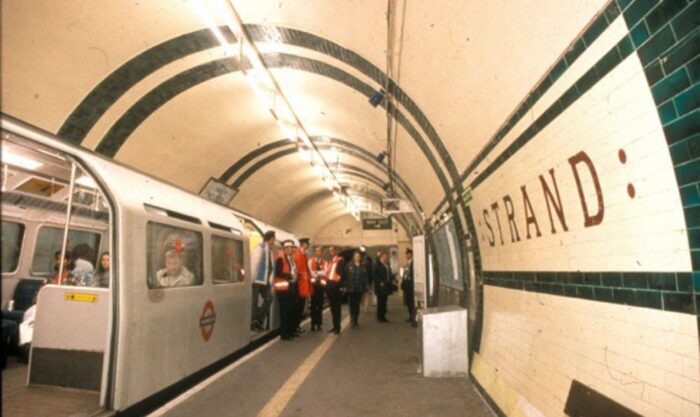
Tours through Aldwych Station are led by the London Transport Museum and tickets cost £45 for adults and £42 for concessions.
London Mithraeum
The devastation London experienced during The Blitz in World War II has long been a major historical focal point for the city, but it’s also inadvertently unearthed some of the city’s lost ancient heritage sites throughout the 20th Century.
In 1954, during the excavation of a WWII bomb site, the Roman Temple of Mithras was inadvertently discovered nestled under what’s now the city’s bustling financial district.
Originally constructed around AD 240, the discovery remains one of London’s biggest archaeological attractions, and London Mithraeum Bloomberg SPACE has painstakingly brought the temple back to its original location some seven meters below Bloomberg’s European headquarters.
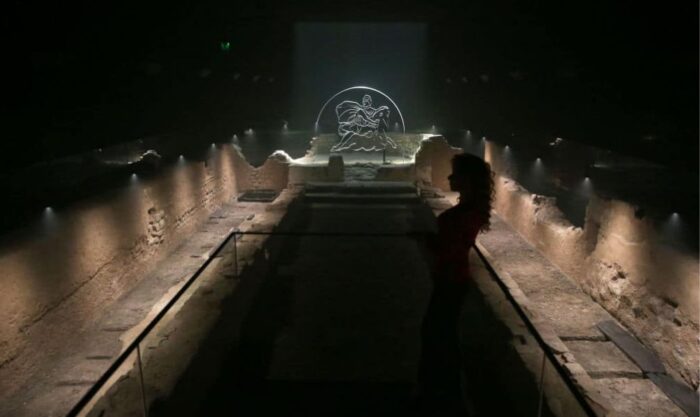
Taking a tour of London Mithraeum today can help you step into the city’s Roman origins. With free entry to the site, you can live Roman Londinium by walking in the footsteps of the first Londoners and viewing some well-preserved Roman artefacts.
Tower of London
The Medieval era was a transformative time for London, and following the Norman conquest in the Battle of Hastings in 1066, William the Conqueror ordered the construction of the Tower of London, the city’s very own castle.
Built in 1070, the Tower of London is one of the city’s oldest surviving structures and a UNESCO World Heritage Site.
There aren’t many buildings that perfectly encapsulate the brightest and darkest chapters of London’s history than the Tower of London, with the Crown Jewels available for visitors to see while the cells of some of the city’s most notorious prisoners are open to explore just a stone’s throw away.
You should also keep an eye out for the Tower of London’s ravens. Legend has it that the tower must be guarded by at least six resident ravens at all times and that King Charles II once claimed the crown and Tower itself would fall should they ever leave.
Tickets for the Tower of London are £34.80 for adults and £17.40 for children aged between five and 15.
Churchill War Rooms
Wartime London has formed an integral part of the United Kingdom’s history, and the secret Churchill War Rooms where Winston Churchill would regularly orchestrate strategies throughout World War II are available for the public to visit.
Taking the form of a bomb-proof underground bunker across a collection of offices in Whitehall, Churchill met with his cabinet 115 times during the Second World War.
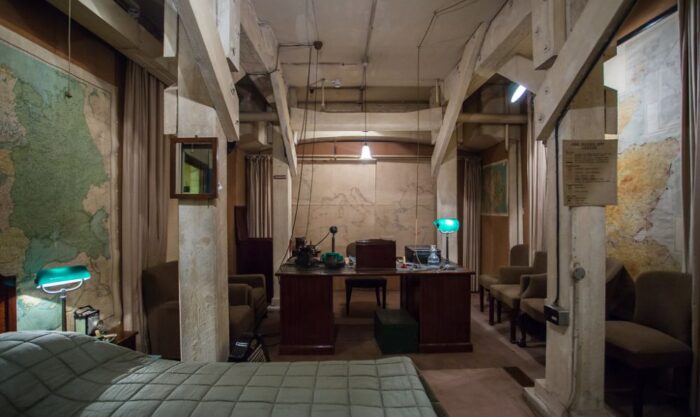
Run by the Imperial War Museum, tours of the Churchill War Rooms serve as a perfectly preserved time capsule of London at war, and prices for the attraction are £33 for adults.
The London Stone
One relic of London’s past hiding in plain sight is The London Stone. Located on Cannon Street towards the City of London, the oolitic limestone proudly on display by the side of the street might not look like one of London’s most mysterious historical artefacts, but The London Stone has a rich history filled with myths and legends.
The disputed heritage of The London Stone dates back to at least the 15th Century, with some claiming that the stone had the role of the Roman “millarium,” which was the mark from which all distances in Roman Britain were measured. However, others have claimed that the stone formed part of a druid’s altar for sacrifices before even the Romans arrived.
By 1450, The London Stone was something of a local celebrity. When Jack Cade led a revolt against King Henry VI, the famous rebel believed striking the stone with his sword would be enough to make him “lord of this city.”
Today, the remains of The London Stone are encased in the wall at 111 Cannon Street and it’s free to visit.
Shakespeare’s Globe
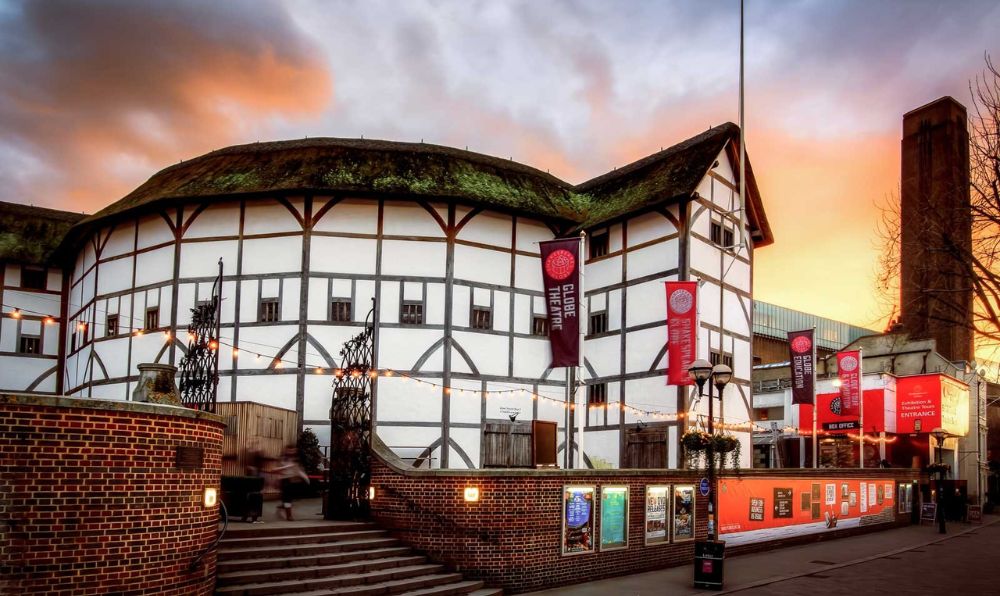
Okay, so Shakespeare’s Globe Theatre might not be a time capsule having been reconstructed in 1997, but the structure is so painstakingly rebuilt to replicate the playwright’s 1599 playhouse that it still feels as though you’re stepping through time as you walk through the doors on London’s South Bank.
Taking the form of a 360-degree auditorium with no roof over the central yard, The Globe is a fully open-air theatre where plays take place whether it’s sunny, raining, or even snowing.
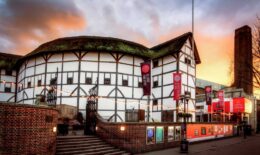
The open stage format of The Globe also reflects the viewing experience that audiences would’ve enjoyed some 400 years ago, and the different galleries throughout the theater make for a truly unique afternoon or evening of entertainment.
While the price for standard guided tours at Shakespeare’s Globe starts at £27, shows at the theatre run all year round with prices for entry ranging from around £25.
Discovering London’s History
London’s history spans nearly 2,000 years and there’s no shortage of relics from the city’s weird and wonderful past no matter where you look.
With different experiences available, some of which are completely free, you can plan your day around visiting many of London’s best-kept time capsules on your next stay in the city.