


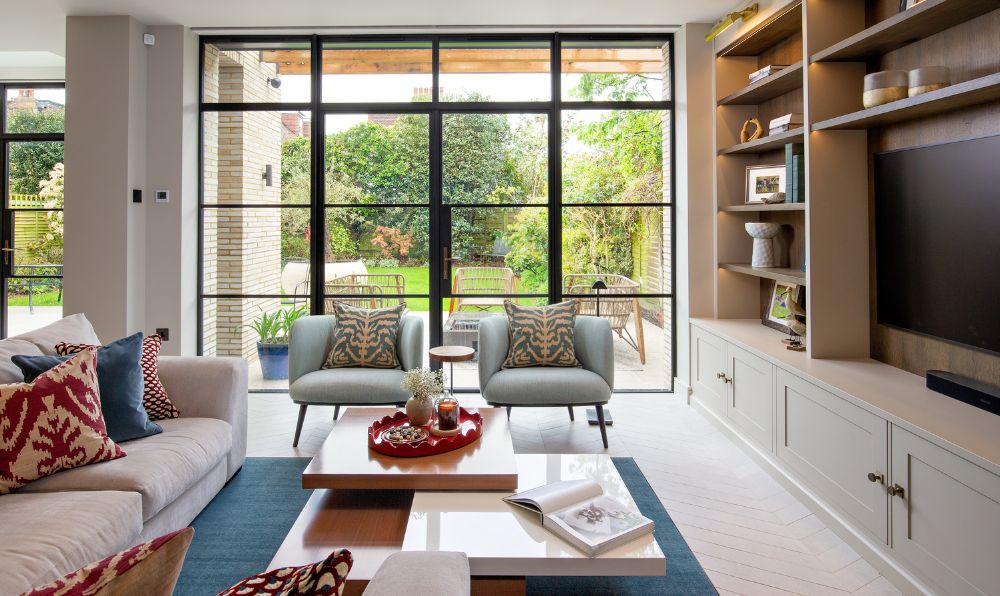
Home renovation trends for 2025
If you’re planning a renovation or extension, here are the big developments shaping the year ahead…
Main image: Herringbone Kitchens
Maximising wellbeing
Homes are increasingly being designed around our mental and physical wellbeing, whether that’s ensuring plenty of natural light and elements of biophilic design that reference nature or incorporating spa-like bathrooms, yoga rooms and home gyms.
Says Kingston architect Sophie Bates: “In an increasingly busy world, our homes need to be a place of calm and relaxation. Using natural materials along with a focus on a connection to natural light and nature through views to sky, garden and trees will continue to be central to home design in 2025.”
L+ Architects concurs, with its designs aimed to bring the outside in using large expanses of glass (combined with high thermal performance insulation to maintain efficiency). Natural light, or replicating its qualities, creates a harmonious home. Says Pablo Lambrechts, Principal Architect of L+: “Lighting is a key component of design, influencing both ambiance and mood. Biophilic lighting mimics natural light’s dynamic qualities, such as changes in colour temperature and intensity throughout the day.” He recommends solutions like Phos Lighting for a natural, calming effect.
Pictured: L+ Architects, Baths of Ashbourne
Creating flexible spaces
Remodelling rather than necessarily extending is a big trend for 2025. But if an extension is the route that will work best for you, a successful space is one that is flexible and can be zoned for different functions. Internal glazing and pocket doors can make spaces work harder, opening up or defining areas as the need arises.
“The flow and functionality of a space are critical,” says Pablo. “Effective space planning ensures your home is practical, maximising its potential for day-to-day living and entertainment.”
Pictured: ID Architecture (photographer Andy Haslam), Artisans of Devizes
Embracing creativity
2025 will see more truly bespoke homes, reflecting our personal tastes. Julia Kendell, interiors expert at the Homebuilding & Renovating Shows and founder of Kendell+Co says that gone are the days of playing it safe with cookie-cutter spaces. “This year, we’re embracing boldness, creativity, and smart, sustainable choices that reflect both our personalities and our modern lifestyles.” Colour choices make a statement and are joyful.
Pictured: Hatch + Mason (©Chris Snook), Sophie Bates Architects
Considered materials
Tapping into the burgeoning interest in biophilic design, we’re emphasising the use of natural materials with wood a key feature in many projects. There’s also a move towards using materials in unexpected ways and adding interest with textures.
Julia Kendell says: “Textured tiles are the comeback kid, popping up throughout the home. The beauty of these tiles is in the layers they bring to a space. They play with light, creating an atmosphere that feels brighter, more dynamic, and inviting. But beyond that, they add dimension to walls and floors—think of them as a way to give your surfaces a little more character.”
Brickwork is being used as a feature with innovative patterns. Wood is also being used creatively on exteriors, from natural colours to striking charred timber cladding (Shou Sugi Ban).
Sustainability a priority
One of the biggest changes in home design is an increasing focus on sustainability. “Sustainability has evolved from being a trend to a fundamental principle of construction,” says Sophie Bates.
“The emphasis is on reducing environmental impact through the adoption of renewable energy, eco-friendly materials such as timber and natural insulation, and innovative solutions such as green roofs, air source heat pumps and solar panels. By 2025, green building certifications, zero-carbon strategies, and the integration of recycled materials are expected to dominate new projects.”
Mumford and Wood, who share their expertise at the Homebuilding & Renovating Shows, believe there will be more demand for higher performing windows with better acoustic and heat insulation ratings. They expect more stringent building regulations on thermal performance and that this will lead to a better grade of solar coatings on glazing. They have also seen an increase in more natural shapes in windows, such as curves, and predict this trend will continue.
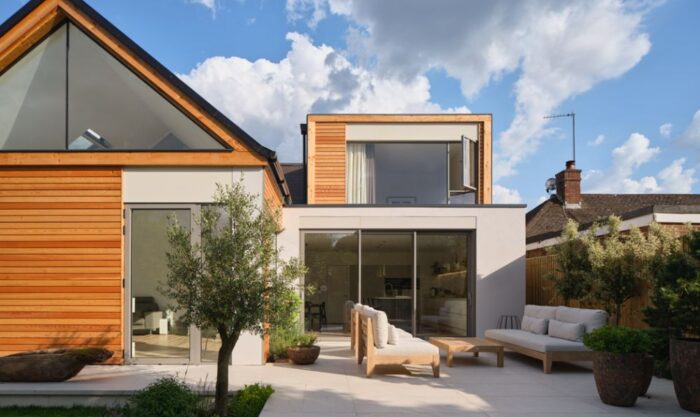
Pictured: Sophie Bates Architects, photography Simon Kennedy


