Review: Vivat Bacchus
Vivat Bacchus
A Bold South African Braai in London
By Sara Colohan
@less_ordinarytraveller
Step into Vivat Bacchus and you’re transported to a wine-soaked slice of South Africa, planted confidently on a busy Farringdon corner. This is a place for people who love meat, bold wines, and unapologetic flavour. If you’re squeamish about eating springbok or ostrich, or prefer your plates delicate and designed for Instagram, it may not be for you. But if you’re hungry for something primal and proudly carnivorous, book immediately!
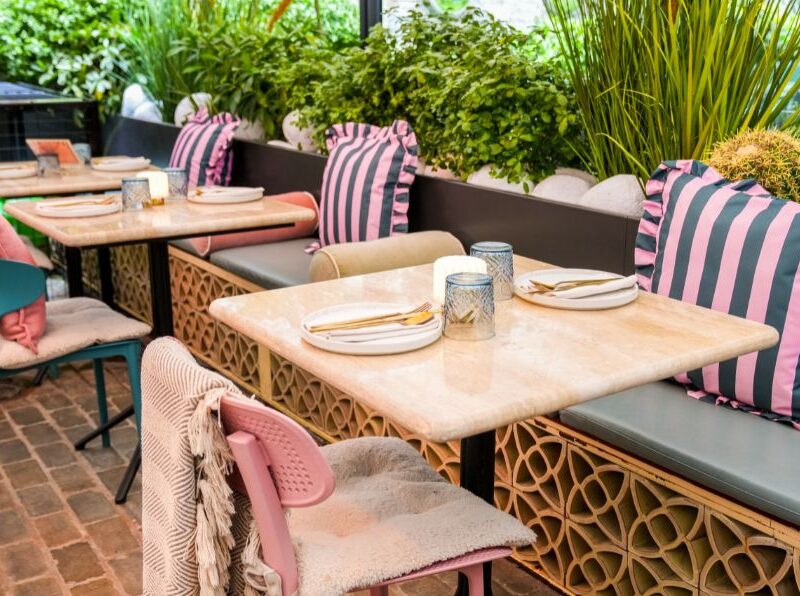
Vivat Bacchus wears its South African heritage with style and oozes meat-and-Malbec confidence. The space gives off masculine energy: exposed brick, dark timber, glass-fronted wine cellars and the room says “proper dining”, but doesn’t ever veer into stiffness.
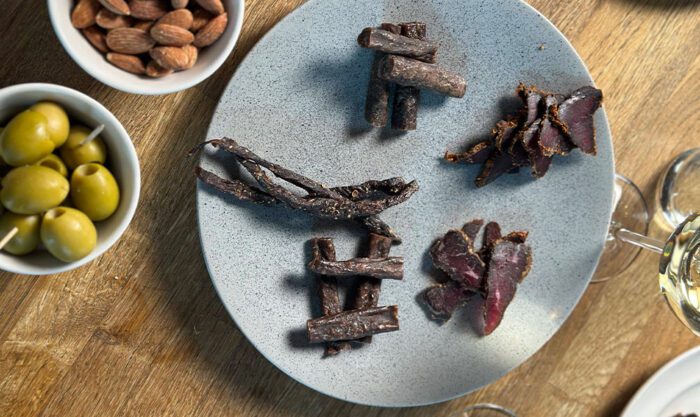
The menu reads like a roll call of South African culinary icons, starting with the Biltong Board. We opted for the tasting spread: wagyu sticks and classic beef biltong (both herb and chilli spiced), and, my first surprise of the night, zebra sausage. Surprisingly subtle and lean, the zebra was delicately spiced, offering a gentle gamey edge that paired beautifully with the richer, darker wagyu. The biltong delivered that signature chewy depth and peppery tang. It’s South Africa’s answer to charcuterie, but without the dainty European flourishes. Served on a rustic wooden board, it matched beautifully with a standout South African sparkling wine.
Forget Prosecco. The Plaisir Cap Classique Brut NV is a golden, buttery-hued sparkler made using the traditional Champagne method, but with grapes from the distinctive soils of Simonsberg. A Chardonnay and Pinot Noir blend, its crisp finish and creamy weight make it a genuine rival to its French counterpart and at £59 a bottle, it’s a steal compared to most English sparkling. We also sampled the Genevieve MCC 2018 Blanc de Blancs, from the Western Cape: citrus blossom, white fruit, and more generous bubbles. At £75, it’s pricier, but still undercuts any Champagne on a menu.
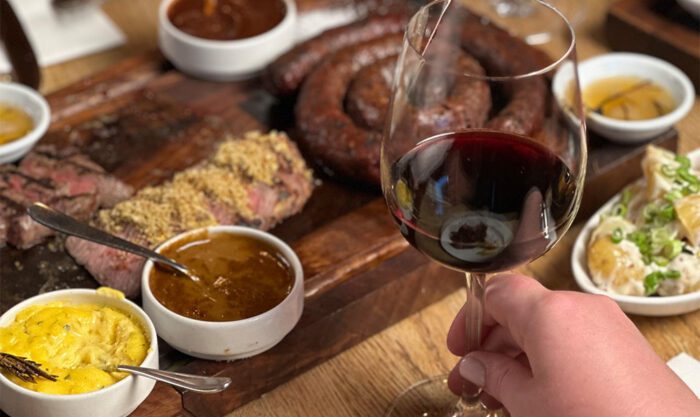
For mains, we shared the Heritage Braai Board: a meaty platter of banana and Coke-glazed pork belly, steak, boerewors (a beef sausage spiced with coriander, nutmeg, clove and allspice), and another first for me: ostrich. Served medium-rare, it tasted like the lovechild of turkey and beef. It was lean, rich, satisfying, and with just a hint of game. A red meat bird sounds like a contradiction, but it works.
We paired it with Mitre’s Edge Cinsault, a light and juicy red that complemented the platter without competing. I tried a Pinot Noir first, usually my go-to, but found it just a tad too spicy alongside already-flavoured meats. Our waiter explained some South African Pinot Noirs, especially those from warmer regions or with oak aging, may display notes of spice.
The sides held their own. Chips were hand-cut, golden, and perfectly salted, and might be the best I’ve had in years. The creamed spinach was velvety but the pièce de résistance? A beef-dripping candle. Made from rendered beef lard and herbs, it melted slowly in the centre of the board. You dip your meat into it as it liquefies, for an extra hit of unctuous, savoury depth.
It’s unapologetically meaty here, but of course there are vegan and veggie options like courgette & pea risotto and a vegan Bobotie spiced cauliflower steak with macadamia nut cream.
Tucked within the restaurant is a small wine shop where the wine team will guide you to something bold, quirky or classic. There’s also a cheese room where guests can handpick their own cheese boards, with chutneys and crackers.
South African cuisine is a true fusion with Dutch, Malay, British, and indigenous African influences all coming together. It’s visible not just in the meats, but in the pickles, spicing, and the liberal use of chutneys and curried sauces.
Vivat Bacchus isn’t trying to be trendy. Instead, it delivers deep-rooted, confident South African hospitality in a city that sometimes forgets how important that is. It’s bold, boozy, and proud, and if you’re curious about eating ostrich or zebra then this is the place to do it.
Come hungry. Leave tipsy. And maybe take home a bottle of that golden Cap Classique, but be warned: it might just ruin Champagne for you.