


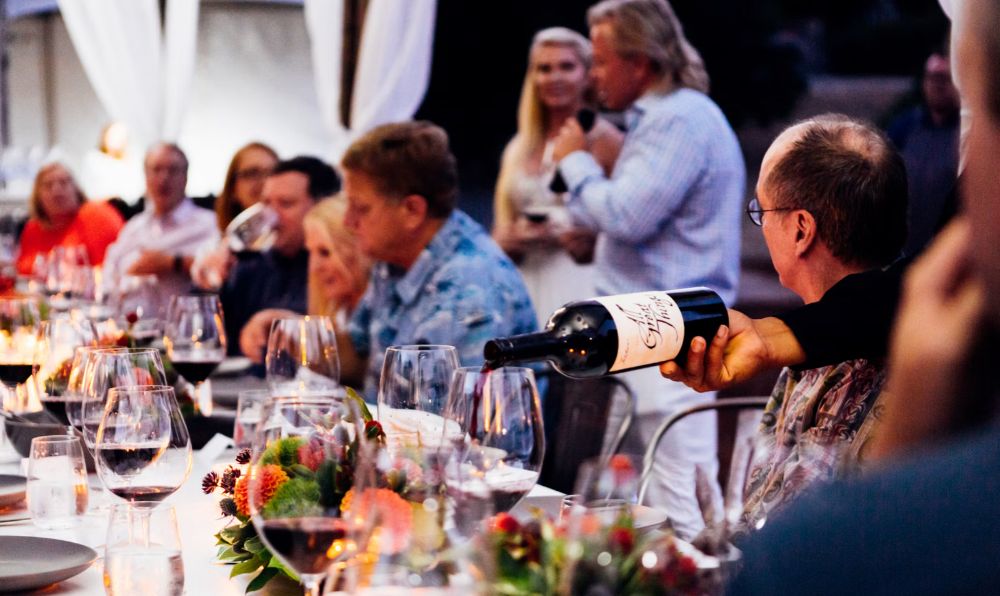
The Pleasure of Sharing Good Wine Around the Dinner Table
The Pleasure of Sharing Good Wine Around the Dinner Table
It’s a moment in nearly every good dinner when the racket shifts. Half the plates are cleared; someone’s begun a story you’ve heard before, and the bottle in the middle is making the rounds for a second time. It’s unintended. But the wine was involved.
A glass of wine on your own is just a drink. The same bottle opened for six people is something else: a small shared event. Someone reads the label, someone else wants to know where it’s from, and before long the conversation has drifted somewhere nobody expected.
Why sharing changes the experience
As long as there’ve been tables, people have been eating and drinking in company, and researchers are finally beginning to quantify its significance. A new University of Oxford paper by psychologist Robin Dunbar suggests that a higher frequency of shared meals correlates positively with wellbeing. People who eat and drink more regularly with friends are more likely to report feeling content with their lives and to have more reliable friends. The paper highlights a point any good host would agree with: the group meals that boost wellbeing the most are those with greater numbers of diners, more shared laughter and more shared reminiscences.
None of that has much to do with the wine, and everything to do with how time is about to be shared. And a good bottle is generally the reason. It makes the meal linger, and brings a topic of conversation not directly related to work or the news.
The bottle is a conversation starter
The easiest way to make wine part of the evening is to pick a bottle with a story. It doesn’t have to be expensive. It might come from a village you visited last summer, or be a grape nobody at the table has tried. It might be the same vintage as your wedding year.
It’s simple to begin with wine from the islands of Cyprus. Maratheftiko, a native red grape, produces rich, peppery wines that pair well with kebabs of lamb and pork. Xynisteri, the most common white variety grown in Cyprus, is crisp and zesty, ideal for grilled fish and meze. Or settle for toasting to old-world wines with a small splash of Commandaria, the sweet wine brewed in the villages above Limassol that is often referred to as one of the oldest named wines still in existence. Poured neat with dessert, a crowd will gather round.
Another idea is to let guests do some of the choosing. Ask everyone to bring a bottle they like and say a sentence or two about why. You get a mix of styles you’d never have picked yourself, and the evening fills up with small stories about holidays and old friends.
If you’re not sure what to choose, ask someone who knows. A good wine shop can turn “something nice for dinner on Saturday, about eight people, lamb” into three sensible options in two minutes. In Limassol, Punin Wine is one place where you can browse Cypriot bottles alongside wines from Bordeaux, Burgundy and Tuscany. According to its website, a sommelier is available to help with food pairing, which takes the pressure off hosts who’d rather focus on the cooking.
A few small things that make a big difference

Sharing wine well isn’t about rules. A handful of habits, though, make the bottle taste better and the evening run more smoothly.
- Uncork a bit earlier. A good number of reds, mostly the more youthful ones, will open up after 20 to 30 minutes in the glass or decanter. Opening the bottle in advance means you can give yourself a fighting chance with the corkscrew while your starter is getting cold.
- Pay attention to the temperature. “Room temperature” did not actually mean a warm summer evening in Cyprus. Most reds are better served at around 14-18C, which is approximately 15-20 minutes in the fridge. Whites and rosés take a little longer, but do not serve them ice cold.
- Serve less, in smaller portions. Smaller glasses allow for wines to breathe and also mean you can top glasses up when you’re circulating around the table. This keeps you on your feet, chatting to everyone. A 75cl bottle of wine will give around 5-6 glasses, so if you’re hosting six people you’ll need at least two or three bottles.
- Order your tastings wisely. Light before heavy, dry before sweet, white before red is traditional. It’s not a requirement, but it prevents an elegant white from tasting watered down after a big red.
- The bottle take the bottle of the table. Only after opening, show the bottle to guests, remove the top, and read the wine notes. Sharing wine with friends is a big part of the experience and part of the fun.
Making room for everyone
That not everyone is a wine drinker is obvious, and a great host makes that simple. Upgraded tasting notes, anyone? Because I’ve noticed that little fizzy bottle of water, fresh lemon juice or a nice squeeze of fresh lemon juice in your favourite glasses is a whole lot better when it isn’t in a bottle. Please pass!
Pace. If you put a bottle of wine on the table, people should feel free to leave a little in the glass rather than dribbling wine down their chin. Just make sure you’ve got lots of water around, the food is served with the wine, and no one is trying to keep up with the Joneses.
Why it’s worth the effort
You could argue that all of this is a lot of thought for one bottle. But that’s rather the point. Choosing a wine for people you care about is a small act of attention. You’re thinking about what they like, what you’re cooking, and what might spark a conversation.
When it works, nobody remarks on it. The bottle goes round, someone asks where it’s from, the dessert is late because everyone’s still talking, and at the end of the night there’s an empty bottle on the table and a slightly louder room than when you started.
That’s the real pleasure of sharing good wine. It isn’t the tasting notes or the price tag. It’s the hours it helps fill with the people around you. Pick something you’re curious about, set the table, and let the evening take care of itself.